Your first message, beyond “hey”
A simple structure for the text you keep rewriting, with examples for an introduction, a dating-app match, and a shared interest.

In this guide
A first message does not need to prove how interesting you are. It needs to make it easy for the other person to place you and respond. Think of it as opening a small door, rather than delivering a perfect introduction.
A greeting, a connection, one question
If a friend introduced you, say who you are and name that connection. If you already matched on an app, pick up one detail they chose to share. End with a question that allows a short answer. Asking about work, hobbies, and weekend plans all at once can feel like an interview.
After a friend introduces you
Hi Alex, it’s Sam — Jamie put us in touch. They mentioned you’re into exhibitions. Have you seen anything good lately?
Only use details you actually know. If you do not know a shared interest, a simple greeting is enough. An introduction is not permission to bring up someone’s private history or a personal story your friend told you.
Picking up an app conversation
I looked up that bakery you mentioned. The pastries look great — what would you recommend for a first visit?
Remembering something they said gives the conversation a natural starting point. You can also refer to a detail on their dating profile. You do not need to dig through old social posts or lead with an assessment of their appearance.
Edit out the pressure
If your draft includes “please reply” or a big declaration about your future together, try taking that part out. A greeting and one thoughtful question can already communicate interest. After you send it, let them choose when and whether to reply. Interest is an invitation, not an obligation.
Before you press send
- Did I use details I genuinely know?
- Is there just one easy question?
- Does this sound like something I would say?
- Can I leave room for their pace and response?
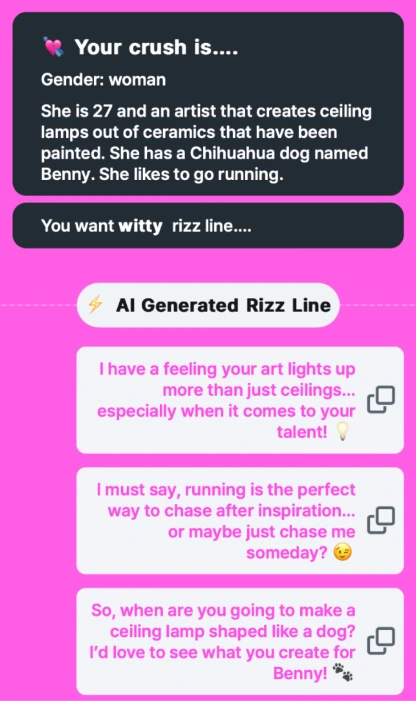
In Karizz, describe how you met and the tone you want. Explore the reply ideas, then replace the details and adjust the wording yourself. Use a suggestion as a starting point for your own voice. These are practice examples, not a promise of a reply or a relationship.
MAKE IT YOURS
Try this prompt in Karizz
Replace the brackets with your own context and use it in the app.
Conversation examples are illustrative. AI suggestions are a starting point, not certainty about someone’s feelings or a relationship outcome.